Pontiac GTO Restoration Costs: 1964–1974 Models
The Pontiac GTO , a hallmark of the American muscle car era, was produced between 1964 and 1974 and became widely acclaimed for its performance and stylish design. Often referred to as the "orig…
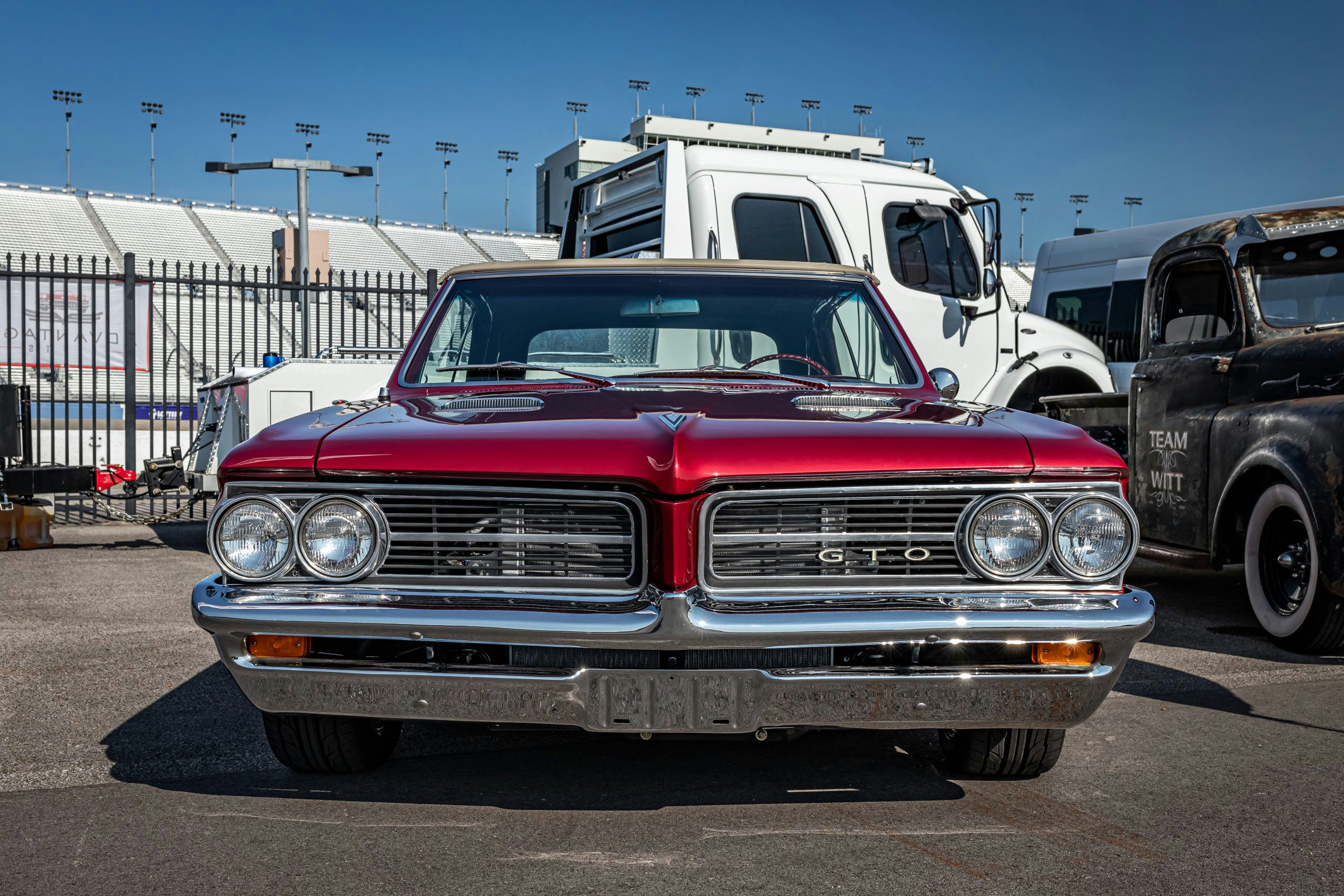
Restoration Title: Value of Pontiac GTO 1964–1974 After Restoration
Overview
The Pontiac GTO, a hallmark of the American muscle car era, was produced between 1964 and 1974 and became widely acclaimed for its performance and stylish design. Often referred to as the "original muscle car," the GTO began as a high-performance option for the Pontiac Tempest, swiftly gaining popularity among driving enthusiasts. Over the years, models evolved in terms of engine capacity and design, spanning different generations from the 1964 debut to the 1974 final production year. Each year brought changes, whether it was horsepower enhancements, body style adjustments, or suspension improvements. Today, restoring these models requires an appreciation of both the historical significance and the unique specifications of each model year. Complexity and authenticity in restoration vary greatly depending on the condition of the vehicle and the availability of original parts. Understanding the evolution of the GTO is essential for accurately estimating restoration costs and ensuring a faithful return to its classic form.
Join the AutoFame community. Become a member for free, add your car to the garage and tell its story. Join AutoFame.
Factors content
Initial Vehicle Condition
The current state of the vehicle is a critical factor. A GTO that has been well-preserved or partially restored will usually require less work and therefore incur lower costs compared to a heavily rusted or neglected vehicle.
The presence of major issues such as engine failure, structural damage, or missing parts can significantly increase restoration expenses.
Originality and Authenticity
Demand for original parts and specifications can drive up costs. Restorers aiming to maintain authenticity with factory-correct finishes, parts, and options often face higher expenses due to the scarcity and premium pricing of original components.
Choosing aftermarket or reproduction parts can reduce costs but might affect the vehicle's value and originality.
Labor Costs
The cost of skilled labor is a significant part of the restoration budget. Professional restoration services have varying price points based on reputation, location, and expertise.
DIY restoration can save on labor expenses but may require a significant time investment and potential expenditures on specialized tools and equipment.
Level of Restoration
The scope of the restoration project, whether it’s a complete frame-off restoration or a more focused mechanical and interior overhaul, will dictate costs.
Show-quality restorations that demand meticulous attention to detail and finishing often result in higher expenses.
Market Factors
Fluctuations in the classic car market and the availability of specific Pontiac GTO models and parts influence restoration costs.
The popularity of the model year and specific features can also affect demand and pricing of parts.
Levels Content
Concours Restoration
This is the highest level of restoration, aiming to bring the Pontiac GTO to a condition identical to when it left the factory.
Every component is either restored to original specifications or replaced with exact replicas.
Such restoration often involves sourcing rare parts, ensuring matching serial numbers, and performing detailed historical research.
Costs for concours restorations can be astronomical due to the need for specialized labor and rare parts.
Show Quality Restoration
While also focusing on achieving a high standard, a show quality restoration might allow for minor modifications for improved performance or aesthetic appeal.
Parts and components should be in excellent condition, but not necessarily original as long as they meet or exceed the original specifications.
This level is typically chosen by enthusiasts who want to showcase their vehicles at car shows without the prestige of a concours condition.
Costs are lower than concours restorations, though still significant due to attention to detailing and part quality.
Driver Restoration
This level of restoration is intended for those who want to enjoy their Pontiac GTO by keeping it fully operational and safe, while maintaining its classic appeal.
Attention is focused on the engine, brakes, suspension, and other safety and comfort features, rather than on achieving factory-original conditions.
Some modern upgrades may be permissible to enhance the driving experience.
Costs are moderate, as functionality and reliability take precedence over perfect originality.
Partial Restoration
Partial restoration targets specific areas of the vehicle that need attention, rather than the entire car.
Commonly involves refurbishing areas like the engine compartment, interior, or exterior paint, depending on the owner's priorities and budget.
This option allows for flexibility and can be spread over time.
Costs vary widely depending on the scope of work chosen and the parts required.
Cost breakdown content
Engine and Drivetrain Restoration
Engine Rebuilding: Costs for rebuilding the engine, including machining, parts replacement, and tuning, can range from $3,000 to $6,000.
Transmission Overhaul: Depending on whether it's a manual or automatic transmission, expect to spend between $1,500 and $3,000.
Exhaust System: Replacing the exhaust system can cost anywhere from $700 to $1,500, depending on the materials and design chosen.
Differential and Driveshaft Repair: Repairs or upgrades typically range from $600 to $1,200.
Body and Paintwork
Rust Repair and Metal Work: Repairing or replacing panels due to rust can vary greatly, from $1,000 to $5,000, depending on the extent of the damage.
Body Straightening: Costs for straightening out the frame or bodywork can run from $1,000 to $2,000.
Paint Job: A professional paint job, considering prep work and quality of paint, can range from $3,000 to $10,000.
Chrome and Trim Restoration: Restoring or replacing chrome and trim can cost between $800 and $1,500.
Interior Restoration
Upholstery: Re-covering seats, door panels, and other upholstery work can amount to $1,000 to $3,000.
Carpeting: Changing out the interior carpeting can cost between $200 and $600.
Dashboard and Instrument Panel: Refurbishing or replacing can range from $400 to $1,200.
Headliner and Sun Visors: Installation of a new headliner and sun visors usually costs between $200 and $500.
Electrical System Overhaul
Wiring Harness Replacement: Installing a new wiring harness can cost $500 to $1,500.
Lighting Systems: New lights and lens replacements can range from $200 to $800.
Battery and Alternator: Replacing these components is typically between $150 and $400.
Suspension and Brake System
Suspension Rebuild: Costs for replacing shocks, springs, and other suspension components can range from $1,000 to $3,000.
Brake System: Overhauling the brake system, including discs, drums, and lines, can amount to $500 to $1,500.
Wheels and Tires
New Tires: Purchasing and installing a set of tires typically costs $500 to $1,000.
Wheel Restoration or Replacement: Restoring or replacing wheels can range from $400 to $1,200.
Approximate Total Restoration Cost
The total cost for a full restoration of a Pontiac GTO from 1964–1974 can range from approximately $15,000 to $40,000, depending on the vehicle's condition and the level of detail desired in the restoration.
Tips content
Assess and Plan Thoroughly
Create a detailed restoration plan and budget to identify priorities and avoid unexpected expenses.
Conduct a comprehensive assessment of your Pontiac GTO to determine the most critical areas needing restoration.
Source Parts Wisely
Purchase parts in bulk where possible for discounts and reduced shipping costs.
Search for parts from multiple sources such as salvage yards, online forums, and enthusiast groups for cost-effective options.
DIY When Possible
Undertake restoration tasks yourself when feasible, such as stripping paint or dismantling non-complex components.
Learn basic automotive repair skills through workshops or online tutorials to tackle small but frequent repairs.
Invest in Quality Tools
Have a car with a story like this? Become an AutoFame member and share it with people who love cars as much as you do.
Buy or rent high-quality tools, which can be reused for future restorations or repairs, saving long-term costs.
Visit used tool stores or garage sales to find necessary tools at a fraction of retail prices.
Join Restoration Communities
Become a member of Pontiac GTO clubs to connect with experienced restorers who can offer advice and share resources.
Participate in online groups and forums to exchange parts and gain insight on low-cost restoration techniques.
Focus on Preventive Maintenance
Regularly maintain components like the engine and suspension to avoid costly future repairs.
Use high-quality protective covers and storage environments to preserve your vehicle’s condition between restorations.
Seek Professional Help Appropriately
Hire professionals selectively for tasks requiring expertise, such as paint jobs or precision bodywork, to ensure quality and prevent rework costs.
Request multiple quotes from different specialists to secure the best price for necessary professional services.
Value content
Potential Return on Investment (ROI) for Restored Pontiac GTOs
Restoring a Pontiac GTO from the 1964–1974 model years can be a rewarding endeavor, both personally and financially. A well-executed restoration can significantly increase the car's market value compared to its initial purchase and restoration costs. While restoration costs can vary widely depending on the car's current condition, the availability of parts, and labor expenses, the ROI can be substantial if the restoration is performed to a high standard.
For a complete frame-off restoration, costs can range from $40,000 to over $100,000. However, this investment can often be recouped and even exceeded in the resale market. Fully restored 1964-1974 Pontiac GTOs often sell for $65,000 to $120,000, with rare models like the 1967 GTO or the iconic 1970 GTO Judge capable of commanding prices upwards of $150,000.
Market Value of Restored Pontiac GTOs
The market value of a restored Pontiac GTO varies based on factors such as model year, originality, and demand. Generally, cars that maintain original parts and adhere closely to factory specifications are more desirable to collectors and enthusiasts, achieving higher selling prices. Authenticity and attention to detail can significantly enhance the car's appeal and market value.
Here's a general perspective on the current market value for restored Pontiac GTOs:
1964-1966 Models:
Fully restored models typically range from $55,000 to $95,000 depending on rarity and condition.
1967 Model:
The 1967 GTO is particularly sought after. Restored models often fetch between $75,000 and $130,000.
1968-1970 Models:
These models are popular among collectors, with market values around $70,000 to $115,000 for meticulously restored versions.
1970 GTO Judge:
This rare model is among the most valuable, with exceptional examples selling for $130,000 to over $200,000.
1971-1974 Models:
While these aren't as valuable as earlier models, restored versions still attract prices from $45,000 to $85,000.
Potential buyers are often willing to pay a premium for cars restored with precision and accuracy, emphasizing how crucial a meticulous restoration process can be for maximizing ROI and achieving a higher market value.
Conclusion
Restoring a Pontiac GTO from the 1964–1974 model years is an intricate and rewarding endeavor that requires careful planning, budgeting, and a passion for automotive history. Understanding the associated costs—from initial vehicle condition assessments to sourcing parts and labor expenses—is crucial for anyone considering taking on such a project. Whether opting for a concours-level restoration or a more practical driver restoration, the investment not only rejuvenates a classic piece of automotive heritage but can also yield substantial financial returns. Restorers who prioritize authenticity and attention to detail often see significant increases in market value, especially for rare and highly sought-after models. By approaching restoration with thorough research, a clear plan, and strategic sourcing of parts and labor, enthusiasts can enjoy both the personal satisfaction and potential financial rewards that come with reviving these iconic muscle cars.
About AutoFame
AutoFame is a home for people who love cars and the stories behind them. Every car on a show field or in a garage has a history: who built it, who saved it, the road trips, the late nights in the shop and the people who helped along the way. AutoFame gives those stories a place to live, so they are not lost when the hood closes or the car changes hands.
Membership is free. Once you join, you can add your car to your own AutoFame garage with photos, specs and the story only you can tell. Restorations, survivors, daily drivers, race cars and family heirlooms all belong here. Other members can find your car, follow its progress and connect with you over the details that matter to car people.
Beyond member garages, AutoFame publishes stories, guides and features on the cars, builders and history that shape car culture. You will find buying and restoration guides, car parts explainers, special editions, the newest models and the classics that started it all. The AutoFame Gallery puts member cars on display for anyone to browse, and the AutoFame YouTube channel adds owner interviews, show highlights and the conversations that happen around a good car.
AutoFame is also built for the people who run car shows. Organizers use it to manage entries and judging, and judges score each car category by category on their phones, with a written guide for every category so nothing gets skipped. After a judged show, owners can see what their car was scored on and how it compared. Shows across the Texas Gulf Coast have run on AutoFame, including the Moody Gardens Car Show in Galveston, Good Grub and Gears, and Keels and Wheels at Lakewood Yacht Club.
AutoFame was founded by Kevin Brady, whose own life in cars began long before he started building tools for the hobby. The idea is simple: the people who love these cars should have one place to share them, learn from each other and keep the stories going.
Whether you own a show winner, a project that is still in pieces or simply love reading about great cars, there is room for you here.
Be part of the AutoFame community. Join free and become a member today.