Sequential Manual Gearbox: Revolutionizing Shifting and Driving Experience
The Sequential Manual Gearbox (SMG) is a fascinating piece of automotive technology that brings the thrill of manual shifting to a whole new level. In this article, we’ll dive deep into the history o…
- Group
- Gearbox
History
The Evolution and Functionality of the Sequential Manual Gearbox
The history of the Sequential Manual Gearbox (SMG) dates back to the early automotive and motorcycle racing scenes where rapid gear changes and precision were paramount. Initially devised to address the limitations of traditional gearboxes, the SMG offers a more streamlined and efficient approach to shifting gears. Unlike the H-pattern gear shifters, a Sequential Manual Gearbox allows drivers and riders to shift up or down in order without the need to navigate through a complex gear layout. This system is especially popular in motorsports and high-performance vehicles due to its ability to provide faster shifts and minimized chances of mis-shifts. The mechanics behind it rely on a ratchet mechanism and electronic actuators to engage gears in a precise sequence, ensuring consistent and quick transitions. While SMGs have their roots in performance settings, their influence has trickled down to consumer cars, where they're appreciated for their blend of manual control and rapid, automatic-like shifting.
Pros
Faster Gear Changes
Sequential manual gearboxes allow for quicker gear changes compared to traditional manual transmissions. This can significantly enhance driving performance, especially in high-speed scenarios. The driver doesn't need to engage a clutch pedal, which can save precious time during gear shifts. The design allows for precise and rapid transitions between gears, leading to a more responsive driving experience.
Improved Acceleration
With faster gear changes, sequential manual gearboxes can improve acceleration. This is particularly beneficial in racing or spirited driving situations where every fraction of a second counts. The seamless transition between gears helps maintain engine power and torque, optimizing speed. For drivers looking to get the most out of their vehicle's performance, this can be a valuable feature.
Ease of Use
Sequential gearboxes can be easier to use than traditional manual gearboxes, as they do not require the constant manipulation of a clutch pedal and gear lever. This design simplifies the driving process, making it more straightforward, especially for those transitioning from automatic transmissions. Drivers can focus more on their driving and less on gear changes.
Enhanced Control
Sequential gearboxes offer a high level of control over the vehicle, as drivers can select the exact gear needed for any given situation. This can be particularly useful in challenging driving conditions, like snowy roads or steep inclines. The predictable nature of gear changes can give the driver a better sense of stability and confidence behind the wheel. This enhanced control can lead to a safer driving experience.
Durability and Maintenance
Sequential gearboxes are generally built to endure high stress and are often more durable than traditional manual or automatic transmissions. Their construction tends to be more robust, making them suitable for high-performance or heavy-duty use. However, they do require regular maintenance to keep them running smoothly. For drivers looking for longevity and reliability, this can be a significant advantage.
Increased Fuel Efficiency
Due to the efficiency of gear changes, sequential gearboxes can potentially lead to better fuel economy. They allow the engine to operate in its optimal range more consistently. This can result in more efficient fuel consumption compared to traditional manual transmissions, especially during aggressive driving. For those concerned about both performance and fuel costs, this is a notable benefit.
Cons
Learning Curve
A Sequential Manual Gearbox (SMG) has a significant learning curve compared to traditional manual transmissions. The absence of an H-pattern gear shift can be disorienting, and it requires practice to shift gears smoothly and efficiently. Many drivers find it challenging to adapt to the sequential shifting pattern, especially if they are used to a conventional manual gearbox.
Cost and Maintenance
SMGs often come with higher initial and maintenance costs. The advanced engineering and electronics involved in sequential systems make them more expensive than regular manual or even automatic transmissions. Additionally, the specialized parts and software updates needed for maintenance can add to the long-term expenses.
Less Control
Even though SMGs are designed for quick gear shifts, some drivers feel they have less control over the vehicle. The inability to skip gears can be a downside, particularly in situations requiring rapid deceleration or acceleration. This limitation can be bothersome for those accustomed to the flexibility of traditional manuals.
Harsh Shifts
While SMGs are known for their quick shifts, they are often criticized for being less smooth in everyday driving conditions. The abrupt transitions can make city driving uncomfortable, making it less ideal for daily commuting. The gear changes can be abrupt and jarring, which many drivers find less than ideal for non-racing environments.
Limited Availability
Sequential Manual Gearboxes are less commonly available in everyday consumer vehicles. They are more often found in high-performance or racing cars, making them a less practical option for the average driver. The limited availability can also make it harder to find mechanics who are familiar with repairing and maintaining these systems.
Noise Levels
SMGs can be noisy, emitting more audible clunks and whines during gear changes compared to their counterparts. For someone who uses their vehicle in an everyday setting, this can be distracting and annoying. The mechanical noises are usually more pronounced, contributing to a less refined driving experience.
Sequential Manual Gearboxes, while offering high performance and quick gear shifts, come with several downsides that might outweigh the benefits for the average driver. The learning curve, costs, reduced control, and rough gear transitions can make them less than ideal for daily driving. Additionally, their limited availability and increased noise levels further limit their practicality in everyday use.
Examples
Sequential Manual Gearboxes (SMGs) have found their way into an array of vehicles, thanks to their efficiency and performance characteristics. Being at the intersection of manual and automatic transmissions, they offer distinct advantages for both high-performance and specialized vehicles.
BMW E46 M3
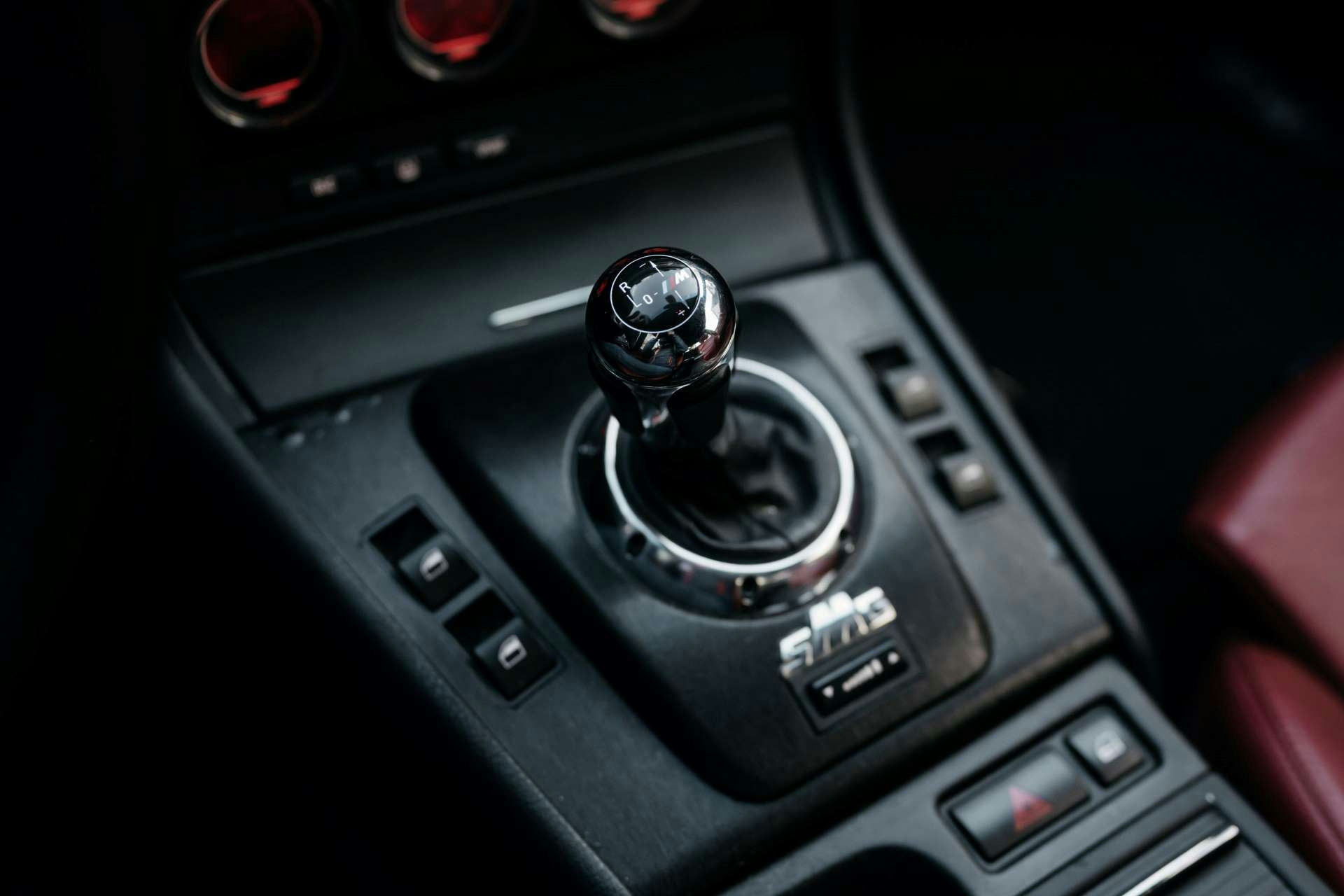
One quintessential example is the BMW E46 M3, which utilized an SMG in its performance arsenal. BMW’s SMG promised rapid gear changes, giving drivers a taste of racing technology in a road car. While it was loved for its responsiveness under spirited driving conditions, some daily users found it slightly less smooth and more abrupt compared to traditional automatics or even true manuals.
Ferrari 575M Maranello
Similarly, the Ferrari 575M Maranello employed an F1-style sequential gearbox. This supercar showcased the gearbox's strengths, providing lightning-fast shifts that complemented its powerful V12 engine. By adapting race-derived technology, Ferrari enhanced the driving experience, although some purists missed the tactile engagement of a gated manual.
Mitsubishi Lancer Evolution X
The Mitsubishi Lancer Evolution X also experimented with an SMG variant, known as the Twin Clutch SST (Sport Shift Transmission). Unlike its predecessors that used manual gearboxes exclusively, the SST aimed to offer better control under high-performance conditions while remaining manageable for everyday use. Fans of the Evo series had mixed reactions; some appreciated the performance gains, while others lamented the departure from the traditional manual feel.
Ford GT
On the American front, the Ford GT, particularly in its recent iterations, has also embraced sequential gearbox technology to complement its supercharged powerplant. The advanced gearbox allows drivers to channel the car’s immense power efficiently, particularly on the track. However, as with many high-performing setups, it can feel a bit out of place during mundane commutes.
KTM X-Bow
Looking at specialist applications, the KTM X-Bow employs a sequential gearbox to good effect. This lightweight, track-focused machine eschews traditional protocols for a swift, direct shift mechanism that suits its radical design. While it’s fantastic on the circuit, its raw and unfiltered nature might be less than ideal in more sedate driving scenarios.
Toyota MR2 Spyder
Dually, the Toyota MR2 Spyder offered a sequential manual option known as the SMT (Sequential Manual Transmission). Marketed as a more user-friendly alternative to its manual counterpart, the SMT was designed to offer ease of use while retaining sporty attributes. The general consensus was that, while innovative, it lacked the engagement purists sought in a lightweight sports car.
In summary, Sequential Manual Gearboxes have carved out niches in various markets. From luxury supercars like the Ferrari 575M to track-oriented vehicles like the KTM X-Bow, and even performance-oriented sedans and coupes like the BMW E46 M3, their application highlights both strengths and limitations. As the automotive landscape evolves, the adaptability of these gearboxes continues to be tested across different vehicle categories, honing in on the balance between everyday usability and high-performance capability.