I8 Engine Layout: Power, Elegance, and Intrigue
The inline-8 (I8) engine layout offers a unique blend of power and elegance that has intrigued car enthusiasts and engineers alike. With a rich history dating back to the early 20th century, this eng…
Group: Engine Layout
The inline-8 (I8) engine layout offers a unique blend of power and elegance that has intrigued car enthusiasts and engineers alike. With a rich history dating back to the early 20th century, this engine configuration has its own set of impressive strengths and notable drawbacks. In this article, we'll delve into the storied past of the I8 engine, explore its pros and cons, and highlight some classic and modern vehicles that have utilized this distinctive engine layout. Get ready to discover why the I8 engine continues to captivate automotive enthusiasts around the world.
Join the AutoFame community. Become a member for free, add your car to the garage and tell its story. Join AutoFame.
History
The History and Mechanics of the I8 Engine Layout
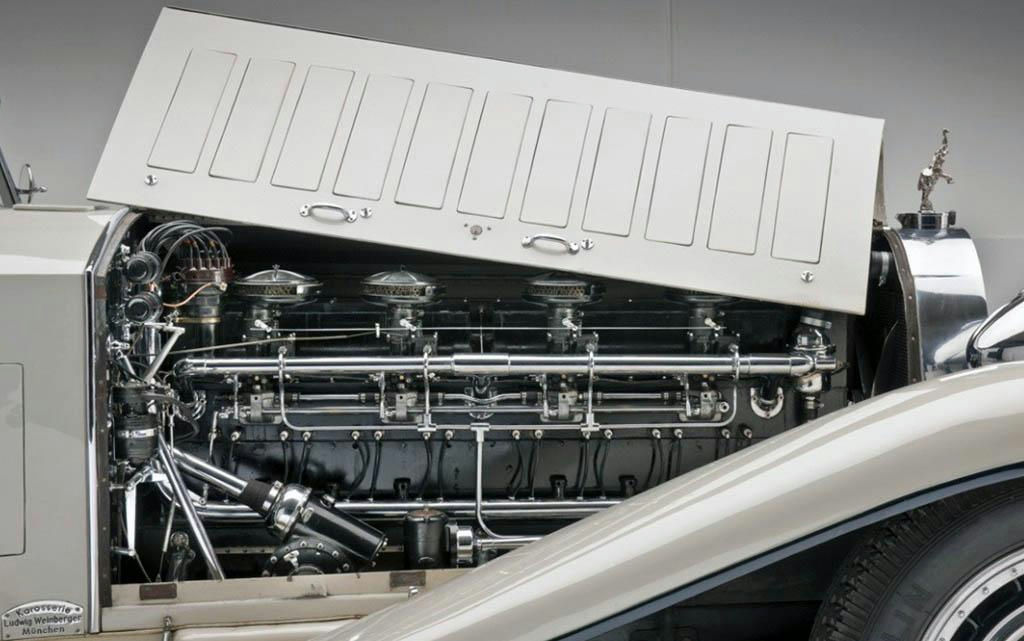
The I8 engine layout, or inline-eight, is a fascinating piece of automotive history that dates back to the early 20th century. It was prominently used in luxury and high-performance cars between the 1920s and 1950s. The I8 engine is essentially an eight-cylinder engine arranged in a single line along a common crankshaft, which provides a smoother operation compared to V-arranged engines due to its even firing intervals. This makes it popular for premium vehicles that prioritize smoothness and refinement. However, the long crankshaft and engine block can pose rigidity issues and complicate the engine bay layout. Its use dwindled with the advent of more compact V8 engines, which struck a better balance between performance and space efficiency.
Pros
Smoother Operation
The I8 engine tends to run more smoothly compared to other layouts, primarily due to the even firing order and balanced design. This smooth operation translates to a more comfortable driving experience, especially on long journeys. It reduces vibrations and enhances your overall comfort while on the road.
Increased Torque
With an I8 engine, you often get a noticeable increase in torque. This can be especially useful for activities that demand a lot of power, such as towing or driving in hilly areas. The engine's design allows it to produce a strong and continuous amount of torque, making driving feel more effortless.
Improved Reliability
Due to its straight and relatively simple design, the I8 engine generally requires less maintenance and can be more reliable over the long term. There's less complexity involved, meaning fewer things that can go wrong. This can offer peace of mind and reduce the frequency and cost of repairs.
Nostalgic Appeal
For those who appreciate vintage cars, an I8 engine can offer a sense of nostalgia and charm. It's a nod to an era when luxury and performance were crafted differently. Owning a car with an I8 engine can be a unique talking point and a source of pride.
Less Complex Cooling System
The alignment of cylinders in one row generally simplifies the cooling system, as it doesn’t require intricate designs to evenly distribute coolant. This can mean fewer issues with overheating and a more efficient cooling process. It's one less thing to worry about, adding to the engine’s overall reliability.
Lower Center of Gravity
The I8 engine layout often results in a lower center of gravity for the vehicle. This can have a positive impact on the car’s handling and stability, making it feel more secure on the road. It can be particularly advantageous in high-speed driving and cornering situations.
Enhanced Acoustic Experience
An I8 engine often produces a distinct and pleasing sound, adding to the overall driving experience. This unique acoustic profile can make every drive more enjoyable and engaging. For car enthusiasts, this auditory element can be a significant plus.
Historic Significance
I8 engines have a rich history and were once the go-to choice for luxury and high-performance vehicles. Driving a car with an I8 engine can give you a sense of connection to automotive history. It's an experience that combines both performance and tradition in a unique way.
Cons
High Cost of Production and Maintenance
The I8 engine layout often comes with a hefty price tag. Producing and maintaining this engine can be quite expensive for the driver. Specialized parts and tools necessary for servicing add to the costs. The complexity of the engine design also means labor charges run higher. When considering the I8, budget-conscious drivers might need to think twice about potential expenses.
Increased Engine Weight
An I8 engine tends to be heavier compared to other configurations. This added weight can affect the vehicle's overall performance and handling. The extra mass could also lead to greater fuel consumption. Drivers who are keen on a nimble, fuel-efficient car might find the I8 engine less appealing. It’s important to weigh this consideration, especially for those prioritizing efficiency.
Less Compact Design
The I8 engine takes up more space under the hood. Its elongated design can limit options when it comes to vehicle design and packaging. Cars with an I8 engine need a longer engine bay, which can affect the overall aesthetics and interior space. For drivers who value cabin room and sleek design, this might be a drawback. It’s a compromise between engine efficiency and spaciousness.
Potential Cooling Issues
Cooling an I8 engine can be challenging. Its layout requires complex cooling systems to ensure all parts receive adequate temperature regulation. This can lead to a higher susceptibility to overheating if not properly maintained. For drivers in warmer climates, this might pose a problem. Proper cooling is essential to maintain engine longevity and performance.
Limited Aftermarket Support
There is generally limited aftermarket support for I8 engines. Finding performance parts or modifications can be harder compared to more common engine layouts. This restriction can deter enthusiasts looking to customize their vehicles. It can also affect resale value, as potential buyers might hesitate over future part availability. This factor can be a deal-breaker for those who enjoy tinkering with their cars.
Have a car with a story like this? Become an AutoFame member and share it with people who love cars as much as you do.
Examples
The Inline-8, or I8 engine layout, isn’t as common today as it was in the early to mid-20th century, but it had a significant role in automotive history. One of the remarkable examples is the Duesenberg Model J, which was an epitome of luxury and performance in the late 1920s and 1930s. With its I8 engine, the Duesenberg Model J offered superior power and smoothness, promoting the brand as a level above its competition. The engine’s long crankshaft allowed for robust power delivery, fitting well into the prestigious and sizable chassis of the Model J.
Bugatti Type 41 (Royale)
Another example is the Bugatti Type 41, often referred to as the Royale. Bugatti utilized the I8 layout to power this massive car, emphasizing both luxury and engineering precision. The Royale's engine was one of the largest and most powerful in its time, designed to deliver effortless performance in what was intended to be a car for royalty. Its application in the luxury segment showcases the I8’s suitability for high-end, large-displacement applications where smooth power delivery is paramount.
1932 Buick Series 90
Moving to American classics, the 1932 Buick Series 90 also sported an I8 engine, positioning itself as a sophisticated choice among contemporary vehicles. With its I8, it offered a balance of ample displacement and refined operation, making it a favored choice for customers desiring a smooth and powerful ride without the complexities of a V-type engine configuration.
Packard Eight
Packard, another luxury American carmaker, utilized the I8 engine in several of their models, such as the Packard Eight. Throughout the 1920s and 1930s, Packard’s cars were known for their elegance and durability, and the I8 was integral to maintaining that reputation. This engine provided a linear and reliable power band, and its longer design suited the elongated hoods of Packard's aesthetically pleasing models.
Mercedes-Benz 770 "Grosser"
Over in Europe, Mercedes-Benz applied the I8 configuration in their luxurious and technologically advanced models, like the Mercedes-Benz 770 "Grosser." Known for its use in state and formal vehicles, the 770's I8 engine provided the necessary power and reliability for a limousine of its stature. This choice emphasized the engine's ability to deliver smooth power over a broad range of conditions, further proving its utility in heavy and prestige automobiles.
Delahaye 135
One more interesting application was found in the Delahaye 135. A high-performance luxury car from France, it featured an I8 engine which exemplified the blend of performance and style. The engine allowed the car to achieve competitive speeds and a smooth driving experience, aligning well with the sophisticated image of the Delahaye brand during its time.
Conclusion
In conclusion, while the I8 engine layout is not common in contemporary cars, its historical use was primarily in luxury and high-performance vehicles where the smooth, robust power delivery of the layout complemented the vehicle's large size and sophistication.
The following models exemplified the I8's benefits, showcasing its place in automotive history:
Duesenberg Model J
Bugatti Type 41 Royale
1932 Buick Series 90
Packard Eight
Mercedes-Benz 770 "Grosser"
Delahaye 135
About AutoFame
AutoFame is a home for people who love cars and the stories behind them. Every car on a show field or in a garage has a history: who built it, who saved it, the road trips, the late nights in the shop and the people who helped along the way. AutoFame gives those stories a place to live, so they are not lost when the hood closes or the car changes hands.
Membership is free. Once you join, you can add your car to your own AutoFame garage with photos, specs and the story only you can tell. Restorations, survivors, daily drivers, race cars and family heirlooms all belong here. Other members can find your car, follow its progress and connect with you over the details that matter to car people.
Beyond member garages, AutoFame publishes stories, guides and features on the cars, builders and history that shape car culture. You will find buying and restoration guides, car parts explainers, special editions, the newest models and the classics that started it all. The AutoFame Gallery puts member cars on display for anyone to browse, and the AutoFame YouTube channel adds owner interviews, show highlights and the conversations that happen around a good car.
AutoFame is also built for the people who run car shows. Organizers use it to manage entries and judging, and judges score each car category by category on their phones, with a written guide for every category so nothing gets skipped. After a judged show, owners can see what their car was scored on and how it compared. Shows across the Texas Gulf Coast have run on AutoFame, including the Moody Gardens Car Show in Galveston, Good Grub and Gears, and Keels and Wheels at Lakewood Yacht Club.
AutoFame was founded by Kevin Brady, whose own life in cars began long before he started building tools for the hobby. The idea is simple: the people who love these cars should have one place to share them, learn from each other and keep the stories going.
Whether you own a show winner, a project that is still in pieces or simply love reading about great cars, there is room for you here.
Be part of the AutoFame community. Join free and become a member today.