Backbone Chassis: Unlocking Car Design Evolution
The Backbone Chassis is an engineering marvel that plays a crucial role in vehicle design, providing a unique structural foundation. In this article, we'll dive into the fascinating history of the Ba…
Group: Chassis
The Backbone Chassis is an engineering marvel that plays a crucial role in vehicle design, providing a unique structural foundation. In this article, we'll dive into the fascinating history of the Backbone Chassis, explore its main advantages and disadvantages, and highlight some notable vehicles that feature this innovative part. Whether you're a car enthusiast or just curious, you'll gain a greater appreciation for this essential component that shapes the driving experience. Stay tuned as we uncover all there is to know about the Backbone Chassis and its impact on the automotive world.
Join the AutoFame community. Become a member for free, add your car to the garage and tell its story. Join AutoFame.
History
The Evolution and Functionality of Backbone Chassis in Automobile Engineering
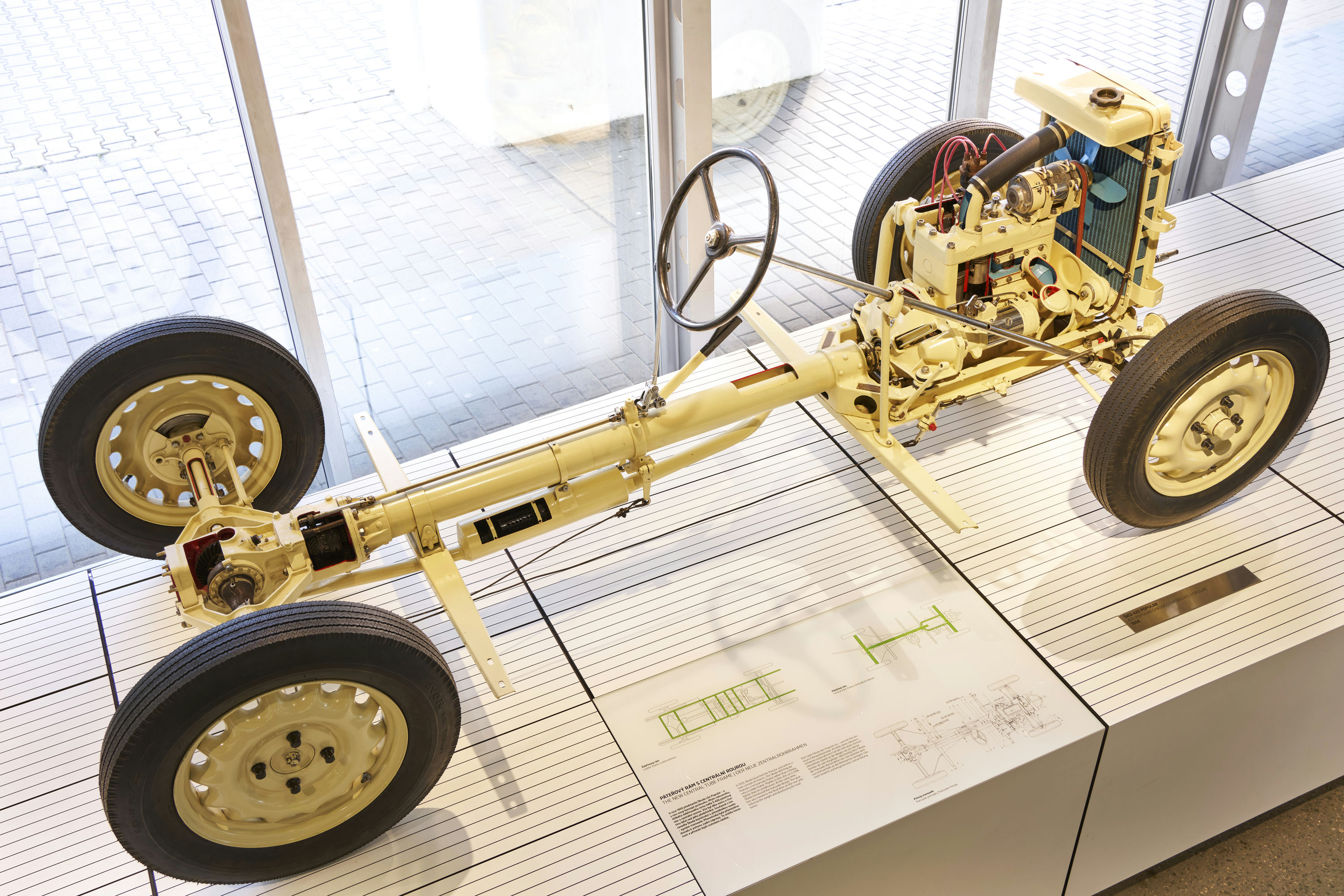
The Backbone Chassis, a unique innovation in the world of automobile design, traces its origins back to the early 20th century. Initially developed as a practical solution for sports cars and light commercial vehicles, this chassis type has stood the test of time, thanks to its simplicity and robustness. Unlike traditional ladder chassis, the Backbone Chassis features a central tubular structure that runs the length of the vehicle. This setup provides a strong, rigid spine to which suspension units are attached, allowing for greater rigidity and a lower center of gravity. Though not widely used in mass-market vehicles, the Backbone Chassis is favored for its lightweight properties and ease of manufacturing, making it a go-to choice for specialized applications where performance and efficiency are key.
Pros
Improved Rigidity
Backbone chassis, with its central tube structure, provides enhanced rigidity. This reduces flexing during cornering, which offers a more stable driving experience. When the car feels stable, it boosts driver confidence, especially at higher speeds. This rigidity also keeps the alignment and geometry intact over rough terrains, reducing wear on suspension and tires.
Weight Distribution
This type of chassis helps in achieving a more even weight distribution. A balanced weight allows for predictable handling, which is a big plus for both everyday driving and spirited runs on twisty roads. A well-distributed weight also translates to less body roll, giving more control to the driver. It helps in reducing the workload on the suspension system, thereby extending its lifespan.
Lower Center of Gravity
Backbone chassis tends to have a lower center of gravity, contributing to better handling. When the car's weight is closer to the ground, it reduces the risk of rollover and enhances stability in sharp turns. This can be especially beneficial for high-performance sports cars, where agility is paramount. Lower center of gravity also aids in better braking performance.
Simplified Design
The simplified design of the backbone chassis often means fewer weld points and components. This generally translates into a more reliable and easier-to-maintain vehicle. Fewer parts mean fewer things that can go wrong, which can be a blessing for long-term ownership. It can also mean a less complicated repair process, saving time and money when something does go wrong.
Compatibility with Various Body Styles
The backbone chassis is versatile and can adapt to different body styles and configurations. Whether it's a small sports car or a larger utility vehicle, this chassis can accommodate different designs. This adaptability offers manufacturers the flexibility to innovate, which often translates to better options for the consumer. It also means that drivers aren't limited to a specific type of vehicle if they prefer a backbone chassis.
Cons
Limited Load Capacity
Backbone chassis structures often lack sufficient strength to carry heavy loads. This can limit the vehicle's ability to handle larger cargo or towing capacity, which might be a drawback for drivers needing a workhorse vehicle. They usually work best in light vehicles where the lack of a strong supporting structure isn't a major concern.
Inflexibility in Design
The singular tubular structure of a backbone chassis doesn’t lend itself well to design flexibility. Modifying or customizing these vehicles can become a challenge. For drivers who want to personalize their car or require specific modifications, a different chassis type may be more suitable.
Poor Crash Safety
Since the backbone chassis lacks extensive crumple zones or multiple layers of protection found in other chassis types, crash safety can be a major concern. While they might perform adequately in controlled conditions, real-world situations often expose their weaknesses in protecting occupants during collisions.
Difficult Repairs and Maintenance
Accessing and repairing a backbone chassis can be complicated. Its unique structure often requires specialized knowledge and tools, which can lead to longer downtime and higher maintenance costs. This can be a drawback for drivers who prefer to service their own vehicles or those who rely on quick fixes.
Limited Application
Backbone chassis are generally used in niche vehicles like sports cars or some light commercial vehicles. Their applicability is limited and may not suit a broad range of driving needs. For drivers looking for an all-purpose vehicle, this chassis type might offer restricted options.
So, although the backbone chassis has its own set of advantages, it comes with notable downsides, especially from a driver's standpoint. Whether it’s load capacity, design flexibility, crash safety, repair complexity, or limited applicability, these factors can significantly impact the overall driving experience and practicality of the vehicle.
Have a car with a story like this? Become an AutoFame member and share it with people who love cars as much as you do.
Examples
In the realm of automotive design, Backbone Chassis has had a notable presence, particularly in vehicles where rigidity and weight distribution play a critical role.
Examples in High-Performance Cars
One prime example is the Lotus Esprit, which leverages the Backbone Chassis' advantages to deliver precise handling and a sportier drive. The design ensures minimal flex, which is a significant benefit for high-performance cars that need to maintain structural integrity under dynamic loads.
Another striking example is the DeLorean DMC-12. Known widely for its pop culture status, the DMC-12 benefited substantially from its Backbone Chassis configuration. This structure allowed for distinct styling and unique door mechanisms without compromising the car's structural strength. While the car had its share of criticisms, the backbone chassis contributed to a sturdy, yet somewhat lightweight framework.
The TVR series, notably the TVR Tuscan, also employs Backbone Chassis technology. For a manufacturer like TVR, which focuses on lightweight sports cars, this type of chassis is pivotal. It offers the required structural rigidity while allowing engineers to cut down on excess weight, thereby enhancing performance and agility on the road.
Other Notable Mentions
Other notable mentions include the Marcos GT series, where the backbone chassis has been a core architectural element. The design principles suit the needs of these British lightweight sports cars, providing a balance between strength and weight-saving, which is vital for maintaining the performance-oriented characteristics of these models.
The Czech manufacturer, Tatra, has used the Backbone Chassis in their off-road vehicles, such as the Tatra T813. In off-road applications, the main advantage of this chassis type is its ability to offer high torsional rigidity. This is essential for navigating rugged terrains and supporting heavy-duty operations without risking structural compromise.
In a different segment, the Škoda Superb of the early generations utilized a modified form of the Backbone Chassis. While not a high-performance sports car, the design gave it a rugged yet stable platform, suitable for both passenger comfort and load-bearing capabilities.
These examples illustrate that the Backbone Chassis has found applications across a variety of automotive needs—from high-performance sports cars to heavy-duty off-road vehicles. The common thread is the chassis' ability to offer a blend of structural reliability with weight-saving advantages, making it a versatile choice in automotive engineering.
About AutoFame
AutoFame is a home for people who love cars and the stories behind them. Every car on a show field or in a garage has a history: who built it, who saved it, the road trips, the late nights in the shop and the people who helped along the way. AutoFame gives those stories a place to live, so they are not lost when the hood closes or the car changes hands.
Membership is free. Once you join, you can add your car to your own AutoFame garage with photos, specs and the story only you can tell. Restorations, survivors, daily drivers, race cars and family heirlooms all belong here. Other members can find your car, follow its progress and connect with you over the details that matter to car people.
Beyond member garages, AutoFame publishes stories, guides and features on the cars, builders and history that shape car culture. You will find buying and restoration guides, car parts explainers, special editions, the newest models and the classics that started it all. The AutoFame Gallery puts member cars on display for anyone to browse, and the AutoFame YouTube channel adds owner interviews, show highlights and the conversations that happen around a good car.
AutoFame is also built for the people who run car shows. Organizers use it to manage entries and judging, and judges score each car category by category on their phones, with a written guide for every category so nothing gets skipped. After a judged show, owners can see what their car was scored on and how it compared. Shows across the Texas Gulf Coast have run on AutoFame, including the Moody Gardens Car Show in Galveston, Good Grub and Gears, and Keels and Wheels at Lakewood Yacht Club.
AutoFame was founded by Kevin Brady, whose own life in cars began long before he started building tools for the hobby. The idea is simple: the people who love these cars should have one place to share them, learn from each other and keep the stories going.
Whether you own a show winner, a project that is still in pieces or simply love reading about great cars, there is room for you here.
Be part of the AutoFame community. Join free and become a member today.